

| How
much does it cost to a replace a roof?
There is no simple answer to how much the bottom line will be for
your roofing project. A bid from your contractor should be based
on square footage, the pitch of roof, accessibility, type of roofing
material needed, 1- or 2-story home, removal of old roof (if necessary),
roof permit and city license, and labor. The average cost to replace
a roof runs from approximately $2.000.00 to $12,000.00 depending
on the size of the roof and the quality of the workmanship and materials.
Can I replace missing and damaged tiles or
shingles without calling a roofing contractor?
It is always recommended
that you use a professional, but in case of an emergency, it is
possible for you to replace a shingle or broken tile yourself.
- Composition
shingles:
For composition shingles, roofing cement can be used to repair
torn or curled shingles. Stabilize repaired shingles with nails
or a heavy board until the cement has dried.
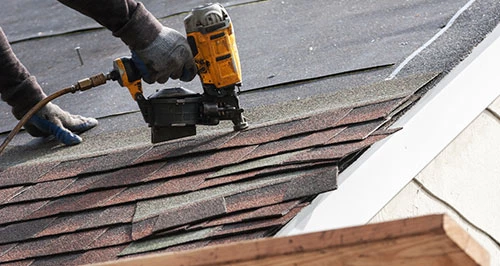
To replace a composition shingle, carefully lift the shingle
above the missing shingle, then trim and place the new shingle
underneath so that it doesn't catch on any edges (it may be
necessary to remove excess staples or nails). Carefully nail
the new shingle into place.
- Wood
shingles or shakes:
For wood shingles, repairs are best done with an aluminum piece
that can be slid under the shingle. This should protect the
exposed area, while not being visible from below.
To replace a wood shingle requires a special tool, a shingle
ripper, to slip under the shingle and hook and cut the nail.
The nail can also be cut with a hacksaw, but is difficult to
do. Slip the new shingle into position, but leave it ? inch
longer than the other shingles. Then nail it into place right
below the end of the overlapping shingle above. Finally, with
a block of wood against the shingle butt, drive it up the last
? inch to bend the nails under the shingle above.
- Tiles:
To replace a tile, remove all of the broken pieces, then gently
lift the tiles and slide the new tile into place until it hooks
over the batten.
How can I choose the right
roofing contractor?
Be sure to get detailed quotes from at least two but preferably
three different contractors. Once you have three quotes sit down
and compare the estimates paying special attention to the materials
used and the labor costs. Just as important be sure to talk to
people who have previously used these contractors. Ask if they
had any complaints, if they cleaned up nicely, if they finished
on time, kept to the contract etc. Any roofing business relies
on referrals, so find out what you can, and choose what suits
you best.
Can my
roof be repaired?
It's usually best to have an experienced roofer inspect your roof
when deciding whether to repair or replace your roof. However,
you (and the contractor) should do an inside roof inspection and
an outside inspection as well. Look for signs that the roof is
failing such as stains on the ceiling, paint that is peeling,
shingles that are missing in several locations, etc? You also
need to take into consideration the age of the roof. Are your
?20 year? asphalt shingles more than 15 years old or were they
installed just a few years ago. If the roof is well within it's
life span and you aren't seeing other warning signs chances are
good you can simply repair and/or replace those shingles that
are causing a problem.
How long
does it take to replace a roof?
Replacing a roof, whether on a commercial or residential building,
is a labor-intensive project and, depending on the type of roof,
could take anywhere from a few days to 2 or more weeks. The time
involved is substantially affected by the weather, as well. Wind,
snow, rain, or even just the threat of one of these and will slow
the process considerably. Also see what to expect form roof project.
For built-up roofs, removing and replacing the roof will probably
proceed at a rate of approximately 1,500 square feet per day.
For single-ply roofs, the rate is closer to 2,000 to 4,000 square
feet per day. Careful planning and close project management can
reduce some of the delays caused by bad weather.
Should
I have my chimney looked at before I have roof work done?
If the chimney requires any maintenance or repair, the best time
to work on it is before a new roof is installed. Coordinate the
chimney mason with the roofing contractor and yourself to make
sure all chimney flashing and chimney repairs are completed properly
before the new roof is installed.
Do I need a permit to have my roof
replaced?
You should check with your local city government but almost assuredly
you will. Pricing for a permit will vary from area to area. Some
will be a flat fee whereas others may be based on the size or
value of the project. If you are having the roof replaced by a
contractor they will typically take care of the permit for you
but it is important to confirm that with the company. If they
do not take care of the permit and/or you are replacing the roof
yourself you will need to talk to city development services.
Do my solar panels have to be removed
to install the new roof?
Although there are rare exceptions to the rule, most solar panels
are either bolted to or mounted on the existing roofing material
and must be removed before a new roof can be installed. Because
solar panels are charged using a type of antifreeze, they will
have to be removed and reinstalled by a licensed plumber who can
insure that the job is accomplished properly.
How
many homes are topped by asphalt shingles? Why?
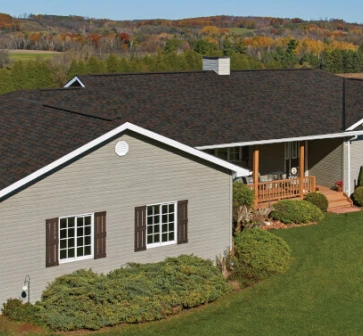
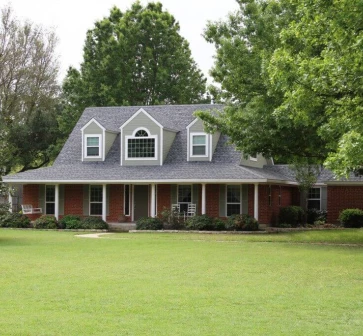
Asphalt shingles are the leading choice for residential roofing
in the United States because they provide quality, durability, versatility
and economy. Four out of five homes are roofed with asphalt shingles.
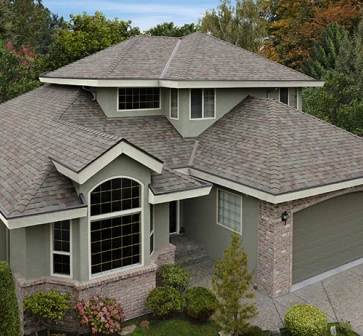
Asphalt shingles offer consumers the broadest array of colors, shapes,
and textures available. With an enormous range of styles, asphalt
shingles can match almost every type of architectural design and
achieve virtually any desired effect – and do it affordably.
What are some
of the benefits of asphalt shingles?
Product Performance – Asphalt shingles perform
well in extreme temperatures and in areas where wind, water, and
ice are prevalent.
Affordability – The efficient, high-volume
production and relatively low application cost of asphalt shingles
provide consumers with an overall value that’s tough for other
roofing materials to match, especially in terms of comparable life
expectancy.
Low Maintenance – Asphalt shingles, when
properly chosen and applied, require little or no regular upkeep,
and are easily repaired if damaged.
Ease of Application – Asphalt
shingles are considered to be the easiest of all standard roofing
materials to apply. In addition, the flexibility and strength of
asphalt shingles supports their application on a wide variety of
roof designs.
Fire and Wind Resistance – Asphalt shingles
are manufactured to resist external fire and flammability standards,
and carry Class A, B or C fire ratings, with Class A providing the
greatest fire resistance. These fire ratings are defined by nationally
recognized standards and tested by independent testing agencies.
In addition, many asphalt shingles carrying a "wind resistance"
label indicate that they have been manufactured and tested to demonstrate
acceptable resistance in high-wind locations."
How are asphalt
shingles made?
In the United States, asphalt shingles are categorized as either
organic-based or fiberglass-based. Organic-based asphalt shingles
are manufactured with a base (also termed mat or substrate) made
of various cellulose fibers, such as recycled waste paper and wood
fibers. This organic base is then saturated with a specially formulated
asphalt coating and surfaced with weather resistant mineral granules.
Fiberglass-based asphalt shingles are manufactured with mat composed
entirely of glass fibers of varying lengths and orientations. This
fiberglass base is then surfaced with a specially-formulated asphalt
coating, followed by weather-resistant mineral granules.
What are
the different types of asphalt shingles?
Strip Shingles – these asphalt shingles are
approximately three times as long as they are wide. Manufactured
in both standard and metric dimensions, strip shingles are distinguished
by the number of cutouts or tabs that they have. The most common
type of strip shingle is the "three-tab" shingle. Different
textural and lighting/shadowing effects can be achieved with strip
shingles depending on the number, shape and alignment of the cutouts.
Laminated Shingles – these special shingles
contain more than one layer of tabs to create extra thickness. They
are also referred to as three-dimensional or architectural shingles
because they create visual depth on a roof and impart a custom look.
Laminated shingles continue to be a favorite among builders, roofing
contractors and homebuyers.
Interlocking Shingles – as the name suggests,
interlocking asphalt shingles are individual shingles that mechanically
fasten to each other, and are used to provide greater wind resistance.
They come in various shapes and sizes providing a wide range of
design possibilities.
Large Format Shingles – generally rectangular
or hexagonal in shape, these shingles do not utilize cutouts or
tabs
.
How
do I determine if a roof should be replaced?
Sooner or later, every roof needs to be replaced, usually due to
the long-term effects of weathering. If a residential roof is more
than 20 years old, it is a prime candidate for reroofing. To determine
if you need a new roof:
- On the ground, walk around your
home with binoculars and inspect your roof for cracked, curled
or missing shingles, as well as any excessive loss of the protective
mineral granules. DO NOT CLIMB ON THE ROOF; walking on the roof
is dangerous and can damage your roof.
- In your attic, take a flashlight
and look at the underside of the roof deck and rafters for any
stains or wet spots indicating water leaks.
Asphalt shingles
can often be applied directly over existing roofs without the necessity
of tearing off the old roof. However, new shingles can not be properly
applied over hard or brittle materials, uneven surfaces for nailing
or roof decks with warped, rotted or unsound support that should
first be replaced or repaired.
Some local ordinances forbid reroofing over two or more layers of
shingles. If a home already has been shingled several times, it
is important to first determine if the roof deck can support another
layer of shingles before undertaking any re-roofing project.
What
are some steep-slope roofing terms?
Architectural Shingles: (See Laminated Shingles)
Asphalt: A bituminous waterproofing agent applied
to roofing materials during manufacture.
Deck: The structural surface to which the roofing
or waterproofing system (including insulation) is applied.
Flashing: Pieces of metal or roll roofing used
to prevent seepage of water into a building around any intersection
or projection in a roof, such as vent pipes, chimneys, adjoining
walls, dormers and valleys.
Granules: Ceramic-coated colored crushed rock that
is applied to the exposed surface of asphalt roofing products.
Hip: The inclined external angle formed by the
intersection of two sloping roof planes. Runs from the ridge to
the eaves.
Incline: The slope of a roof expressed either in
percent or in the number of vertical units of rise per horizontal
unit of run. Also referred to as slope.
Interlocking Shingles: Individual shingles that
fasten together mechanically and provide greater wind resistance.
Laminated Shingles: These shingles have more than
one layer of tabs to create extra thickness. They are often referred
to as three-dimensional or architectural shingles because they create
visual depth on a roof and impart a custom look.
Large Format Shingles: Generally rectangular or
hexagonal in shape, these shingles do not have cutouts or tabs.
Membrane: A roof covering or waterproofing layer
whose primary function is the exclusion of water.
Re-covering: The process of covering an existing
roofing system with a new roofing system.
Re-roofing: The practice of removing an existing
roofing system and replacing it with a new roofing system.
Ridge: The uppermost, horizontal external angle
formed by the intersection of two sloping roof planes.
Roll Roofing: Asphalt roofing products manufactured
in roll form, either smooth- or mineral-surfaced.
Saturated Felt: An asphalt-impregnated felt used
as an underlayment between the deck and the roofing material.
Self-Adhered Eave and Flashing Membrane: A self-adhering
water-proofing shingle underlayment designed to protect against
water infiltration due to ice dams or wind driven rain.
Strip Shingles: Manufactured in both standard and
metric dimensions, these asphalt shingles are approximately three
times as long as they are wide, and are distinguished by the number
of cutouts or tabs that they have. The most common are three tab.
Square: A unit of roof measure covering 100 square
feet.
Thermal Insulation: A material applied to reduce
the flow of heat.
Three-Dimensional Shingles: (See Laminated Shingles)
Underlayment: Asphalt saturated felt used beneath
roofing to provide additional protection for the deck.
Valley: The internal angle formed by the intersection
of two sloping roof planes.
Vapor Retarder: A material designed to impede the
passage of water vapor into the roofing system.
What
are some of the advantages of BUR (Built-Up Roofing)?
Built-up roofing systems have had a long-standing popularity, due
in large part to the success and proven reliability of BUR. The
stock of 20, 30 and 40-year-old BUR roofs still in excellent condition
attests to this fact. Specifically, BUR roofs offer:
- Multi-Layer
Protection – the multiple layers of bitumen and
bitumen saturated “felts” make a watertight barrier
capable of providing many years of reliable protection from
the elements.
- Thermal
Performance – Built-up roofing systems exhibit
exceptional resistance to the conduction of heat between the
exterior and interior of a building, resulting in noticeable
reductions in heating and cooling costs.
- Fire
and Uplift Resistance – Built-up roofing systems
are tested through Factory Mutual Research Corporation to meet
very strict fire resistance requirements and ensure adequate
uplift resistance under extreme wind conditions.
- Economy
– Compared to other high performance commercial roofing
systems, built-up roofing is one of the best investments on
the market due to its competitive cost per year of expected
service life.
What
are some low-slope roofing terms?
APP (Atactic Polypropylene): A modifier of asphalt
(see modified bitumen roof membrane) that increases the UV resistance
of the bitumen as well as its flexibility at low temperatures and
improves its flow resistance at high temperatures.
Asphalt: A bituminous waterproofing agent applied
to roofing materials during manufacture.
Built-Up Roof (BUR): A flat or low-sloped roof
consisting of multiple layers of asphalt and ply sheets.
Base Sheet: A saturated or coated felt installed
as the first ply in some multi-ply modified bitumen roofing assemblies.
Bitumen: (1) a class of amorphous, black or dark
colored (solid, semi-solid or viscous) cementitious substances,
natural or manufactured, composed principally of high molecular
weight hydrocarbons and found in asphalts, tars, pitches and asphaltines;
(2) a generic term used to denote any material composed principally
of bitumen.
Bituminous: Containing or treated with bitumen.
Cap Sheet: A granule-surfaced coated sheet used
as the top ply of a modified bitumen roof membrane.
Coated Sheet or Felt: (1) an asphalt felt that
has been coated on both sides with harder, more viscous asphalt;
(2) a glass fiber felt that has been simultaneously impregnated
and coated with asphalt or coal tar on both sides.
Cold-Applied Roofing: A continuous roof membrane,
consisting of plies of felts, mats or fabrics that are laminated
on a roof with alternate layers of cold-applied roof adhesive and
surfaced with a cold-applied coating.
Deck: The structural surface to which the roofing
or waterproofing system (including insulation) is applied.
Felt: A flexible sheet manufactured by the interlocking
of fibers through a combination of mechanical work, moisture, and
heat. Felts are manufactured principally from vegetable fibers (organic
felts), glass fibers (glass fiber felts), or polyester fibers (polyester
felts); other fibers may be present in each type.
Fiberglass Mat: An asphalt roofing base material
manufactured from glass fibers.
Flashing: Pieces of metal or roll roofing used
to prevent seepage of water into a building around any intersection
or projection in a roof, such as vent pipes, chimneys, adjoining
walls, dormers and valleys.
Granules: Ceramic-coated colored crushed rock that
is applied to the exposed surface of asphalt roofing products.
Incline: The slope of a roof expressed either in
percent or in the number of vertical units of rise per horizontal
unit of run. Also referred to as slope.
Low-Fuming Asphalt: An asphalt that contains a
small amount of special
polymer that, when heated, floats to the surface, creating a skim
layer on
the asphalt in the kettle that traps most of the fumes.
Membrane: A roof covering or waterproofing layer
whose primary function is the exclusion of water.
Modified Bitumen Roof Membrane: A continuous, semi-flexible
roof membrane assembly consisting of plies of saturated felts, coated
felts, fabrics or mats between which alternate layers of bitumen
are applied, either surfaced or unsurfaced.
Organic Felt: An asphalt roofing base material
manufactured from cellulose fibers.
Re-covering: The process of covering an existing
roofing system with a new roofing system.
Re-roofing: The practice of removing an existing
roofing system and replacing it with a new roofing system.
Roll Roofing: Asphalt roofing products manufactured
in roll form, either smooth- or mineral-surfaced.
Saturated Felt: An asphalt-impregnated felt used
as an underlayment between the deck and the roofing material.
SBS (Styrene-Butadiene-Styrene): A modifier of
asphalt (see modified bitumen roof membrane) that enhances the bitumen’s
ability to resist the effects of aging the weather.
Self-Adhering Membrane: A membrane that can adhere
to a substrate without the use of an additional adhesive. The undersurface
of a self-adhering membrane is protected by a release paper or film,
which prevents the membrane from bonding to itself during shipping
and handling. These membranes can be base sheets, ply sheets, cap
sheets or underlayments.
Smooth-Surfaced Roof: A roof membrane surfaced
with a layer of hot-mopped asphalt, cold-applied asphalt-clay emulsion,
cold-applied asphalt cutbacks, elastomeric coating, or sometimes
with an unmopped, inorganic felt.
Square: A unit of roof measure covering 100 square
feet.
Thermal Insulation: A material applied to reduce
the flow of heat.
Underlayment: Asphalt saturated felt used beneath
roofing to provide additional protection for the deck.
Vapor Retarder: A material designed to impede the
passage of water vapor into the roofing system.

|